About Electric Mind
Who you would be working with.
Electric Mind is a consulting firm founded in Berlin in January 2024 by Ulrich Callmeier. He leads every engagement himself, and he has spent twenty years on an earlier version of this problem.
Discuss your AI initiative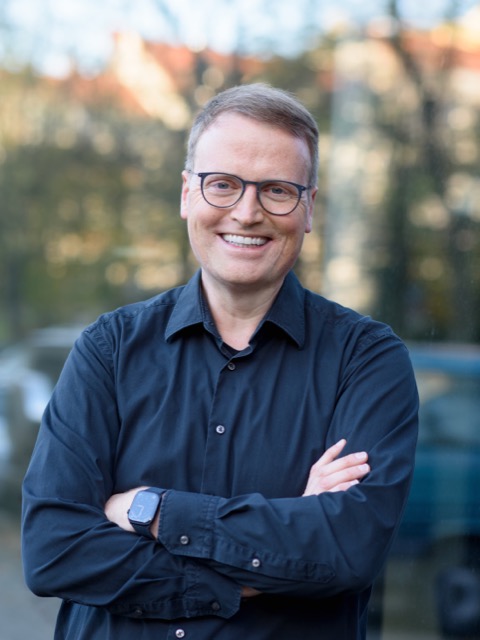
Twenty years of making an organization's rules machine-readable
Ulrich Callmeier is a computer scientist. He chose Saarland University for its focus on artificial intelligence and computational linguistics: language was the most interesting thing he could imagine understanding with computers, and AI, even with the methods of the 1990s, the most promising way to try. He worked in language-technology research at DFKI in Saarbrücken from 1998, and his diploma thesis produced PET, a parsing platform for large grammars that became one of the standard parsers of the DELPH-IN research community. He published on it in Natural Language Engineering (2000), in the CSLI volume Collaborative Language Engineering (2002) and, with Stephan Oepen, at IWPT 2000.
In 2000 he went to Silicon Valley, as a language engineer at a start-up building an AI system that answered customer-support e-mail. The system had to know the organization it was answering for, which makes it an early encounter with the problem Electric Mind works on today. PET went with him and became a substantial part of the company's processing stack. After two and a half years he returned to Saarbrücken for a short stint on research projects, among them SKATE, the SAP-funded language-checking research that Acrolinx later turned into a product.
In July 2003, while Acrolinx was still being spun out of DFKI in Berlin, he joined as CTO, before its first product release. Acrolinx makes AI content governance: quality gates, embedded in more than thirty authoring environments, that check enterprise content against each organization's own terminology, standards and rules. He stayed twenty years, until the end of 2023: CTO from 2003, managing director from 2009, and from 2015 also COO, which put finance, IT, support and customer success on his desk alongside product and engineering.
The job, for most of those years, was taking what an organization knew about its own language and making a machine apply it inside the tools people used every day, and then earning those people's trust in the result. That is an earlier version of what Electric Mind does with generative AI, where the context is no longer just language rules.
He founded Electric Mind in January 2024 as the home for everything he wanted to do next in AI: advising organizations on their initiatives, and working alongside a few founders on theirs. The two feed each other. What those projects teach about making AI hold up in real use goes into the consulting, and the other way round.
Hands on, every day
He has worked with language models since the first transformer models, and every day since 2023: AI-assisted coding with Cursor from mid-2023, coding agents since Claude Code's release in February 2025, Codex and Pi alongside it, OpenClaw since December 2025, and a personal orchestration layer that hands work to agents and checks the result independently before anything is accepted. In 2024 and 2025 he advised Markup.ai, the company Acrolinx has become, on evaluating generative AI against rule-based systems, and built the benchmark and the evaluation pipeline himself.
Electric Mind also works alongside a handful of founders on their projects, with Ulrich Callmeier as technical advisor and consultant. That work is where the firm's methods meet real problems early, and where some of its tools come from. Three examples:
Due diligence for commercial real-estate transactions
With a name partner of a Berlin law firm. The difficult part is the context-engineering problem: encoding what the lawyers actually check, where the exceptions live, and how to evaluate the system against their standard rather than a benchmark.Awandu
A consumer app that turns a family's photos into a thirty-second video of someone growing up. Its beta launched in October 2026. Ulrich Callmeier advised its founder from a prototyped idea to the launch and helped get it built: a different kind of product, and the same question of what it takes to ship something people trust.Tools for personal relationships and reflection
An exploration of what AI can usefully do in that most human of domains, running as production prototypes with real people using them.
Talk to the person who would do the work
Bring something concrete, at whatever stage it is.
Discuss your AI initiative